
Core Pillars of Heavy Equipment Cab Design
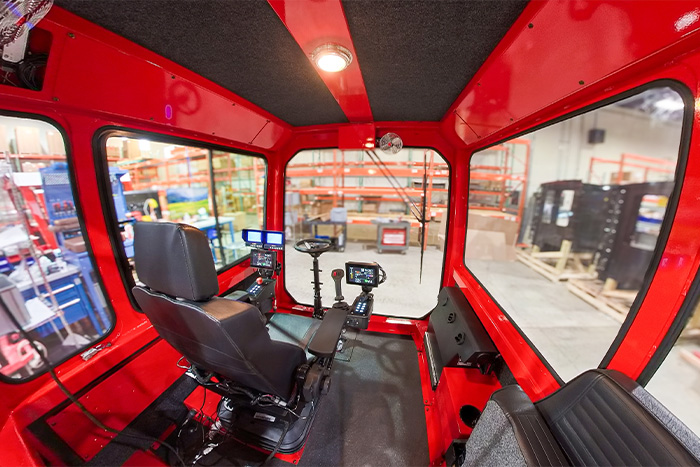
Enhancing Operator Safety & Efficiency
Designing the next generation of heavy equipment cabs requires a focused approach on key pillars that enhance operator safety, comfort, and productivity. From ergonomic seating and intuitive control layouts to advanced voice and gesture-based interfaces, modern cabs integrate cutting-edge technology to reduce operator fatigue and improve machine efficiency. Optimizing visibility, climate control, noise reduction, and feedback mechanisms further empowers operators to work smarter in demanding environments. At our 2025 Innovation Summit, GS Global Resources VP of Engineer, Josh Heinz, took a deep dive into the essential elements shaping scalable, user-centered cab designs that meet the evolving needs of heavy equipment operators.
Primary Controls
“We want to test and create control systems that are intuitive, so the operator knows what to do without confusion and frustration.”
Think through the main functions used by an operator during his shift and put those controls within easy reach, like on an integrated armrest assembly, arm pod, or a dashboard that is no more than an arm’s length away. It’s important to ensure a control layout that’s intuitive, thinking through things like the joystick axis and switch actuation. And because the operation of every machine is unique, it’s very beneficial to utilize 3D printing to quickly get a prototype for operators to test and suggest modifications before committing to a design.
Visibility
“Operators need to get their primary scene, all the equipment. Good visibility is key.”
Visibility for operators means more than just looking out of the cab’s front windshield. To have a comprehensive view of the machine’s surroundings and anything that may interfere with primary functions, the operator really needs a panoramic view from their seat. Camera systems have continued to advance and can provide different views, including bird’s-eye and rearview angles, even HD side views are possible with systems like Convoy Technologies MirrorVue™ system. Good visibility is essential, both for safety, but also for comfort and productivity, as it helps reduce fatigue and awkward movement while operating the machine.
Comfort
“The design process includes thorough iteration and operator involvement to find ergonomic positions for controls that work for 5th to 95th percentile people.”
Reducing operator fatigue during 8-to-12-hour shifts is a challenge when designing a cab environment. You need to keep ergonomics top of mind not just when determining a control layout, but you must also consider features of a seat itself, such as adjustability and suspension. If an operator is required to look in more than one direction often, it may be worthwhile to invest in a rotating seat to support multiple orientations. Climate and noise also play a big role in operator comfort. HVAC systems, glass type and thickness, and sealing all play key roles in creating a quiet and comfortable cab environment.
Safety
“Integrating feedback like vibrations on joysticks or seats can alert operators and improve safety by combining sensory inputs.”
Prioritizing safety influences every element of cab design. In terms of individual controls, it can be helpful to combine multiple types of sensory inputs and feedback methods. These multimodal interfaces can include visual and audio cues or haptic feedback which enhance situational awareness and guide an operator, keeping their attention focused on what’s most important at any moment. It’s also important to keep the reach zone of the operator in mind. Important controls and emergency devices need to be within easy, natural reach of the operator without excessive stretching or movement. But beyond control programming and layout, the operator must also have a clear cut entry and exit out of the cab, both for daily use, but also in case of emergency. Paths must be clearly defined and unobstructed, and you must consider things like alternate exits or accessible escape hatches, depending on the cab’s size. Finally, any safety regulation and compliance standards required by that industry must of course be met. This includes testing for protective structures, like ROPS and FOPS, as well as other emerging standards like ISO 23875, which outlines air quality guidelines for heavy equipment cabs to ensure operator health and comfort are prioritized.
As heavy equipment continues to evolve, so will cab design. By focusing on intuitive controls, increased safety measures, and optimizing operator comfort, OEMs can create cabs that meet the core needs of today’s operators. The journey toward next-generation cabs is ongoing, but these core pillars will still be the foundation.