
Unlocking AI: Data-Driven Decision Automation for Heavy Equipment
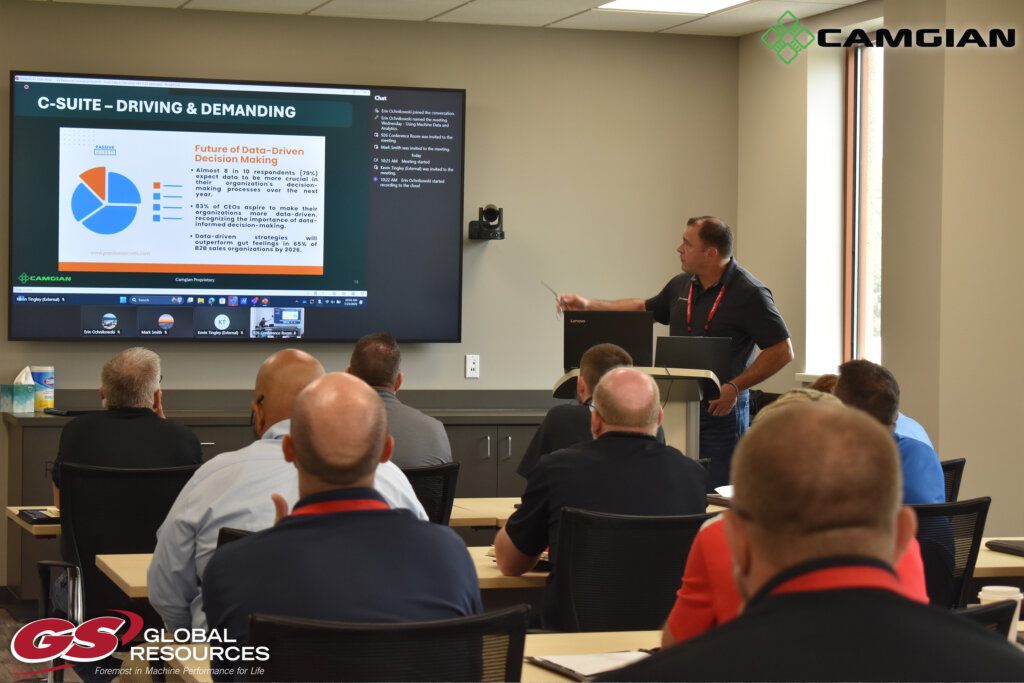
In an era where heavy equipment manufacturers face increasing pressure to optimize efficiency, reduce downtime, and deliver smarter solutions, data-driven decision automation is emerging as a transformative force. Kevin Tingley, an expert in industrial IoT and AI from Camgian, presented at the 2025 GS Global Resources Innovation Summit. In this Q&A, he shares insights into how advanced analytics and automation are reshaping the heavy equipment industry. From predictive maintenance to real-time operational intelligence, Tingley discusses the practical applications and strategic benefits that data-driven technologies bring to OEMs and their customers.
What are the key drivers behind the rapid growth of data in recent years?
The rapid growth of data in the heavy equipment OEM space is primarily driven by the proliferation of IoT sensors and telematics systems that continuously monitor machine performance, location, and operating conditions in real-time. Additionally, the shift toward predictive maintenance, autonomous operations, and fleet management solutions has exponentially increased data collection from engines, hydraulics, and other subsystems.
How does unstructured data impact businesses and what challenges does it present?
Unstructured data; such as emails, videos, social media posts, and sensor logs—contains valuable insights but lacks a predefined format, making it difficult to organize and analyze. This complexity creates challenges for businesses in terms of storage, searchability, and extracting actionable intelligence. Managing it can also be expensive and time-consuming, requiring dedicated investment, technical expertise, and patience to unlock its full value.
Heavy Equipment Industry – Unstructured data from sources like technician notes, warranty claims, operator feedback, maintenance videos, and engineering documentation contains valuable insights but is difficult to analyze using traditional database systems, leading to missed opportunities for improving equipment reliability and customer satisfaction. The primary challenges include the high cost and complexity of processing diverse formats (PDFs, images, audio logs, freeform text), difficulty extracting actionable patterns without advanced AI tools, and the risk of critical information remaining siloed across departments. This results in slower root cause analysis, inconsistent quality control, and inability to leverage historical knowledge for design improvements or predictive models, ultimately impacting warranty costs and equipment uptime.

Credit: iStock
What are the main types of AI technologies used in heavy equipment and industrial applications?
The main AI technologies used in heavy equipment include machine learning algorithms for predictive maintenance that analyze sensor data to forecast component failures and optimize service intervals, and computer vision systems that enable autonomous navigation, obstacle detection, and operator assistance features. Natural language processing and generative AI are increasingly deployed for technical support, maintenance documentation, and operator training, while reinforcement learning powers autonomous operations in applications like autonomous haul trucks in mining. Edge AI computing is also critical for real-time decision-making in equipment controls, load optimization, and fuel efficiency management without relying on constant cloud connectivity.
What role does decision automation play in improving operational efficiency?
Decision automation enhances operational efficiency by using AI and data-driven algorithms to streamline complex, repetitive, or time-sensitive decisions. It reduces human error, accelerates response times, and ensures consistent decision-making across operations. By freeing personnel to focus on higher-level strategic tasks, decision automation improves both speed and overall mission effectiveness.
Heavy Equipment – Decision automation streamlines operational efficiency by using AI and rules-based systems to make routine decisions in real-time without human intervention, such as automatically adjusting engine performance based on load conditions, triggering maintenance alerts, or optimizing fleet deployment schedules. This reduces response times from hours or days to milliseconds, minimizes human error, and allows skilled personnel to focus on complex problem-solving rather than repetitive decision-making tasks. In heavy equipment operations, automated decisions around fuel consumption, route optimization, and equipment allocation can significantly reduce operating costs while improving asset utilization and uptime.
An estimated 80% of AI projects fail (Rand Corporation Statistic). What are common business and technical reasons for failure?
Common business reasons for AI project failure include lack of clear ROI definition and business alignment, insufficient executive sponsorship, underestimating change management needs for user adoption, and attempting to solve problems that don’t actually require AI solutions. On the technical side, failures stem from poor data quality and availability, inadequate data infrastructure, skills gaps in AI/ML expertise, choosing overly ambitious use cases without proven foundational capabilities, and failure to properly integrate AI systems with existing operational technology and enterprise platforms. Additionally, many heavy equipment OEMs struggle with the transition from successful pilots to production-scale deployments due to underestimating the computational resources, ongoing model maintenance, and cross-functional collaboration required to sustain AI systems in real-world operating conditions.
How can product managers enhance the success of AI and data-driven projects?
Product managers can enhance AI project success by clearly defining measurable business outcomes and ensuring alignment between technical capabilities and customer pain points, while maintaining realistic expectations about what AI can deliver versus traditional solutions. They should prioritize data quality and availability assessments early in the planning process, work closely with cross-functional teams to establish feedback loops for continuous model improvement, and design user experiences that build trust and adoption among technicians, operators, and fleet managers. Strong product managers also focus on incremental value delivery through phased rollouts rather than attempting transformational changes all at once, ensuring each milestone demonstrates tangible ROI before scaling.
What are decision aids and how can they support OEMs making the best use of their data?
Decision aids are tools (software) or systems that analyze complex data and provide actionable insights to guide decision-making. They can range from single-data decision automation focused on a specific task to a combination of decision aids that automate multiple complex data processes. For OEMs, decision aids help interpret operational, maintenance, and performance data to optimize product design, improve efficiency, and anticipate potential issues, enabling more informed, timely, and effective business and engineering decisions.
How do advanced analytics platforms improve data adaptation and operational insights?
Advanced analytics platforms consolidate and process large volumes of structured and unstructured data, enabling organizations to extract meaningful patterns and trends. By applying techniques such as predictive modeling, machine learning, and visualization, these platforms transform raw data into actionable insights. This improves decision-making, accelerates response times, and allows operations to adapt more effectively to changing conditions.
What is your number one piece of advice for OEMs wanting to better utilize their data or incorporate AI into their business?
Begin by focusing on the end user to identify a tangible, high-value business or operational challenge they are facing. Then, start small, tackle a specific, measurable problem that delivers clear value, rather than attempting to “boil the ocean.” This approach builds confidence, fosters trust, and strengthens commitment to leveraging data effectively.
Contact us today to find out how we can integrate connected components and better utilize your data to get ahead of machine issues and reduce downtime.