
Permanent Magnet Motors Support Significant Cost and Power Efficiencies for Industrial OEMs
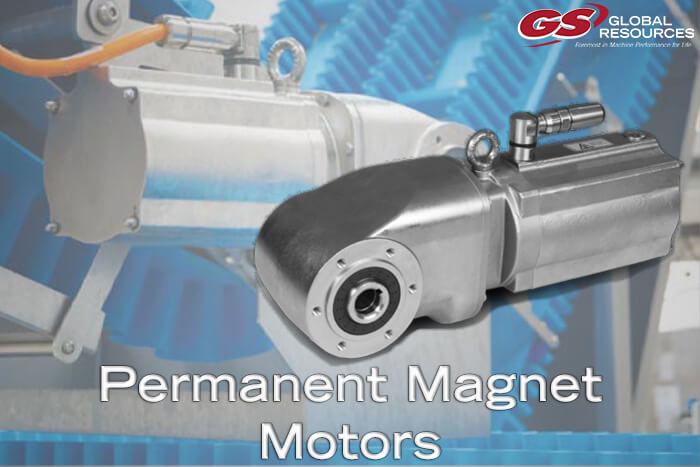
Just because a certain solution has worked historically in an application, doesn’t mean that it’s the best method, particularly concerning hydraulics. Ways to connect trusted hydraulic components with versatile and better controlled electronics and significantly increase efficiencies and lower application costs. In the case of one food and beverage manufacturer, we were able to integrate permanent magnet motors, in conjunction with variable frequency drives, to allow a machine to be operated at a wide range of speeds while simultaneously improving power efficiency.
Historically, this manufacturer used induction motors and gearboxes, which require that the rotor be magnetized and that there is a consistent lmag, or magnetizing current, even if the motor isn’t loaded. This means that the magnetizing current is virtually the same when it’s not loaded and when it’s at full load. So for any task when the motor is lightly loaded, this setup is an inefficient means of power. The same is true of the motor speed if it is running at less than full speed.
Depending on the industry, the ability to run a machine at relatively low, or moderate speeds for short periods of time may be necessary to synchronize multiple machine lines, run them sporadically for different shifts, or adjust for the types of products being produced. With advancements in electronics, variable frequency drives have developed the ability to operate motors in a more complex environment using permanent magnet motors. These have magnets incorporated into the rotor, eliminating that lmag of the induction motor.

In the graph above, you can see that if a machine is running at 25% of rated torque and 50% of rated speed, the induction motor shows about 67% efficiency. However, at the same loading and speed, the permanent magnet motor shows about 83% efficiency. In the food and beverage example previously discussed, each of their lines runs 4500 to 5500 hours per year with an electricity cost of $0.11/kWh. So for the entire plant of more than 100 lines, results in very significant cost savings over time. With many lines running, they can see significant electrical cost savings, and 25% to 70% more efficiency depending on the induction motor’s loading.