
Simple Adjustments Support Machine Crossover of International Specifications
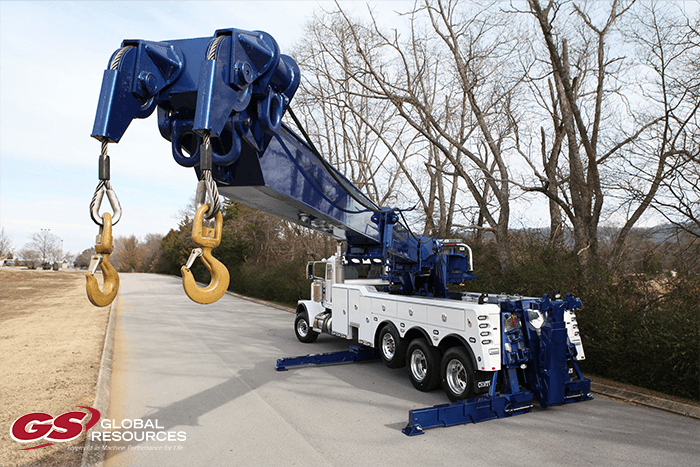
The geographic location in which a piece of machinery operates affects a number of factors. First and foremost, it determines the required legal specifications for safe operation for that machine. For OEMs that serve international customers, this can create some challenges. However, implementing a few simple features or feature expansions, the same machine can be acceptable multiple international specifications, simplifying OEM design processes and maintaining more consistent branding across the board.
In the case of one tow truck manufacturer that services both the United States and the United Kingdom, there are certain safety functions that need to be built into the load moment indication system for trucks in the U.K., but not necessary for those operating in the U.S. For the U.S. machines, in order to maintain proper function and safety of the truck mounted crane, a large amount of information is still readily available to the operator, including size of load, boom angle, boom extension, and rotation. Furthermore, warnings associated with those factors are programmed into the system depending on the customer specifications, such as a warning when approaching load capacity.
However, those warnings were not adequate for the safety parameters required for trucks in the U.K. This OEMs trucks fall under EN12999, which require full function lockouts, physically blocking hydraulic flow to a cylinder. For this truck line, the engineering team at GS Global Resources integrated 9 lock out valves in total on the European machines to accomplish this for multiple functions including lift pressure is too high, equipment level tips too far, and retracting the winch too far.
Additionally, trucks built for the American market were originally designed with an LMI system and numerous sensors to read the load, the counterbalance, the limit switch, and more. But European markets require redundancy on critical functions, so those trucks are built with duplicate sets that will take over in the event of a primary sensor malfunction. Since the same format for reading the truck load is used in both countries, by solely integrated the second set of sensors the European trucks meet their required legal specifications.